-
Creating a Secure MLOps Environment with PowerScale and ClearML: A Practical Guide #4
The article outlines the setup and configuration of the ClearML Agent within an MLOps environment, emphasizing its role as the primary executor of ML experiments. It details the integration with PowerScale for efficient data access, improved performance, and simplified management while maintaining effective experiment tracking through the ClearML server.
-
OneFS MetaDataIQ – An Intro
MetaDataIQ: Simplifying metadata management and drastically increasing query times for Unstructured Data In today’s data-driven landscape, efficient management of unstructured data is a cornerstone for enterprise innovation. Dell PowerScale MetaDataIQ introduces features to tackle the challenges of metadata management, offering enhanced performance and deeper insights into data operations. By way…
-
Back to fundamental – PowerFlex Lifecycle Management
When evaluating a product, customers typically have a list of evaluation criteria. Among these, support and software upgrades are crucial. The quality of support and the ease of upgrading the software significantly influence the likelihood of converting potential customers into loyal ones. In most of the sales cycles or deployment…
-
Creating a Secure MLOps Environment with PowerScale and ClearML: A Practical Guide #3
This blog details the integration of PowerScale storage with a MLOps platform using Dell’s CSI driver and ClearML server. It covers setting up user permissions, enabling NFS, installing the CSI driver via Helm, creating a storage class, and deploying ClearML, ultimately establishing a fully functional MLOps environment.
-
Creating a Secure MLOps Environment with PowerScale and ClearML: A Practical Guide #2
Step 1 – A well Organized folder structure Before configuring networking or access zones, we need to establish a well-organized directory structure. This foundation will support our entire MLOps infrastructure, from data storage to Kubernetes integration etc, the workflow typically would be the following Understanding the Structure Base Path Convention…
-
Creating a Secure MLOps Environment with PowerScale and ClearML: A Practical Guide #1
As organizations increasingly rely on (gen)AI and machine learning to drive innovation and competitive advantage, the role of data—and by extension, data management—has become paramount (was it ever not?). Enter the modern storage administrator, now a crucial player in the MLOps ecosystem (believe me! I’m turning into one myself!) They…
-
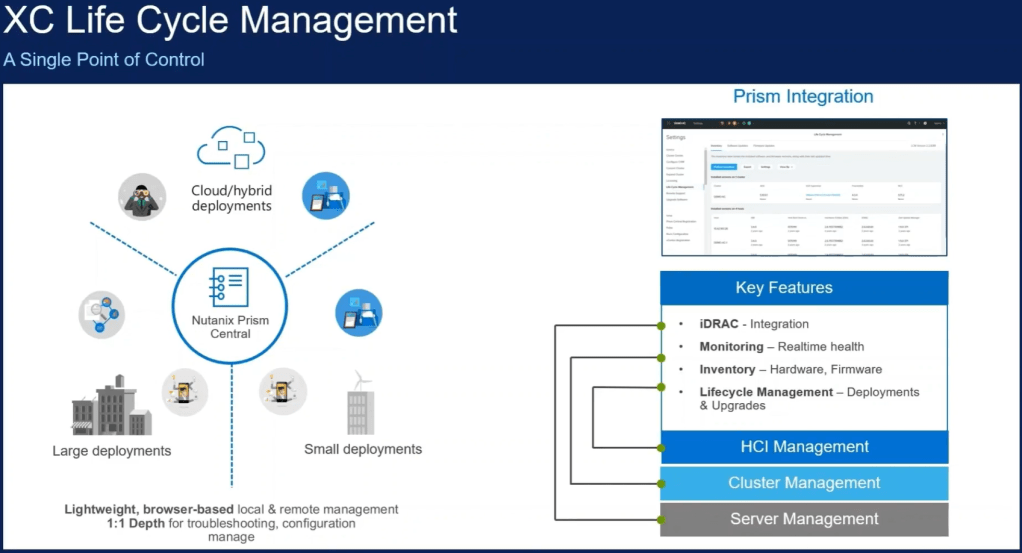
Streamlining Infrastructure Management with Dell XC Plus and Nutanix Lifecycle Manager
In today’s rapidly evolving IT landscape, managing infrastructure efficiently is crucial for businesses to stay competitive. Dell Technologies and Nutanix have joined forces to address this challenge, offering a solution that simplifies complex upgrade workflows and ensures uninterrupted operations. Let’s dive into the unique value proposition of Dell XC Plus…
-

Leverage PowerScale with GPU Direct Storage – Create a data loader with NVIDIA DALI
Introduction In our journey to optimize high-performance computing environments, we’ve previously explored PowerScale multipath driver testing and its impact on performance. Now, we’re taking the next exciting step: integrating NVIDIA GPU Direct Storage (GDS) with Dell PowerScale using NFS over RDMA. This is a powerful combination to help with throughput…
-

PowerScale Multipath Driver – Testing
In our last two blogs, we successfully demonstrated how to enhance PowerScale performance using TCP Multipath and and RDMA Multipath – allowing clients to access multiple PowerScale nodes at once. With those configurations in place, we saw significant improvements in redundancy and overall throughput. Now, we’re pushing further. This time,…
-
Leveraging the multipath client side driver – Part#3 – RDMA over NFS Multi-Path Setup
In our previous post, we explored how TCP Multipath and OneFS SmartConnect can enhance PowerScale performance. Today, we shift our focus to the power of Remote Direct Memory Access (RDMA) and how to configure it in your network for low-latency, high-throughput data transfers. We will cover some suggested steps in…

 All things Unstructured Data